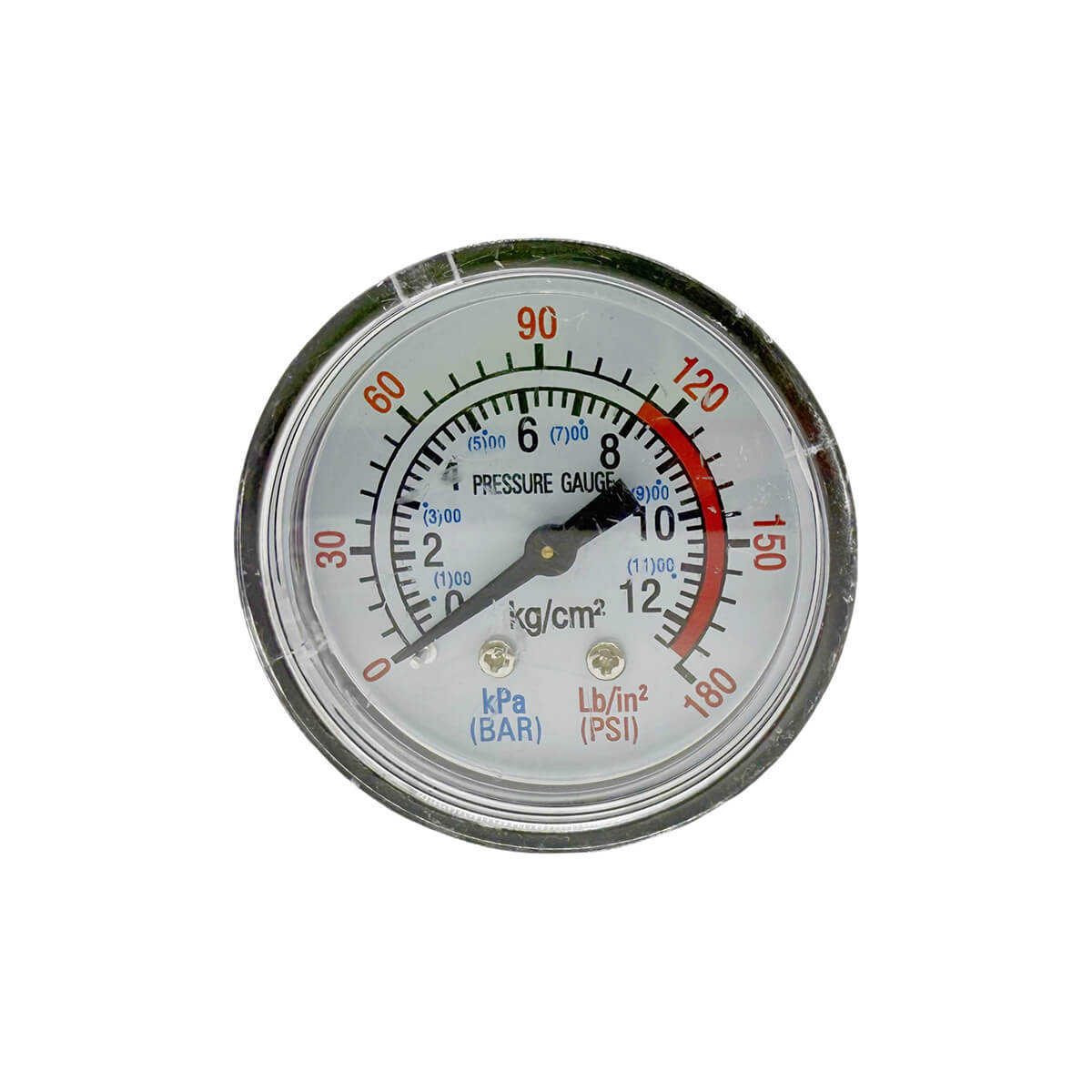
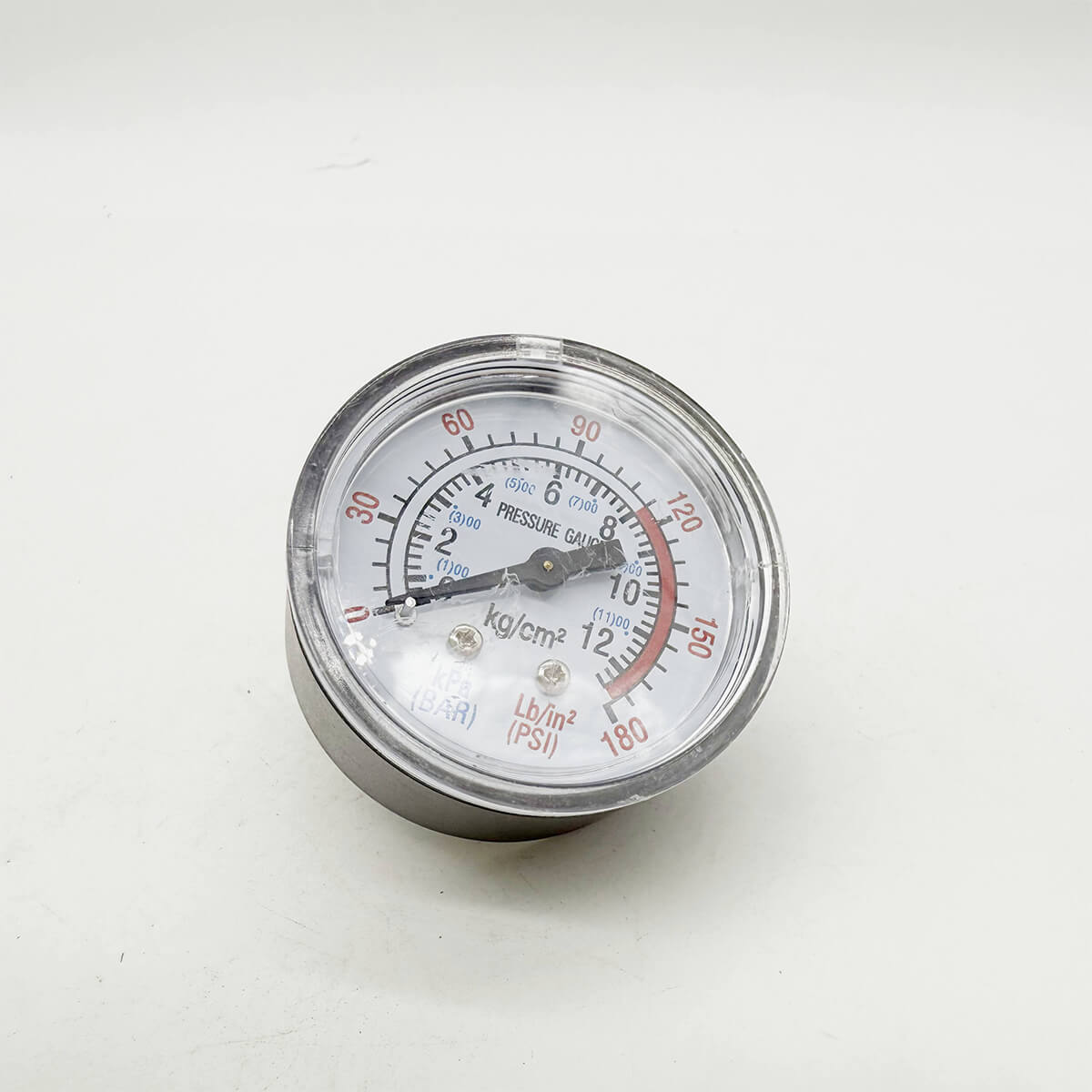
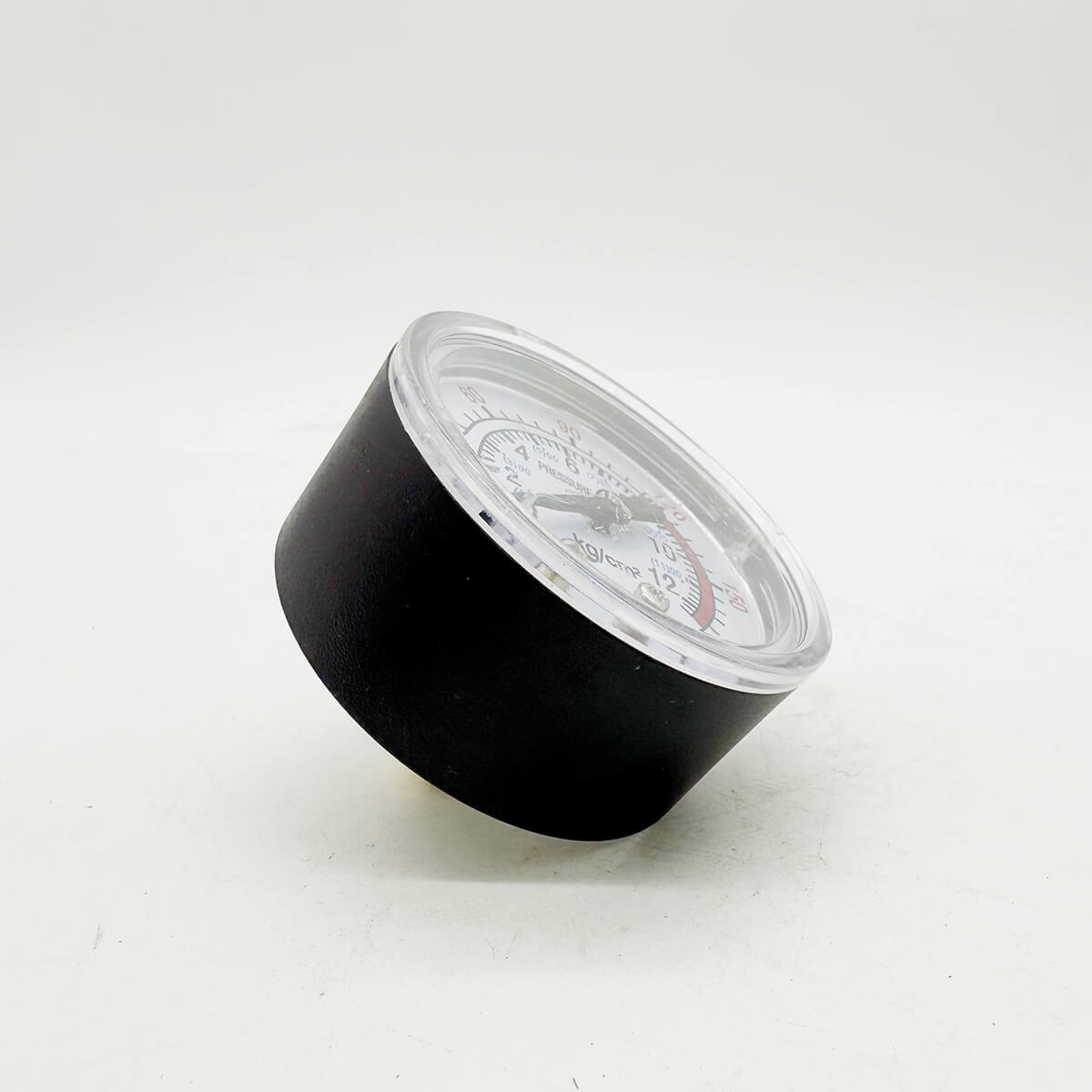
China air compressor pressure gauge just for you
purchase air compressor pressure gauge for all models
BISON, a leading OEM manufacturer in China, specializes in designing and producing high-quality air compressor pressure gauges that deliver exceptional accuracy, durability, and performance for all types of compressors. From standard analogue gauges to advanced digital models, BISON ensures every product meets international standards and performs reliably under demanding conditions.
With BISON’s OEM and ODM capabilities, you can access customized solutions tailored to your system’s requirements. Take control of your compressor today—inspect, calibrate, or upgrade your gauges to ensure safe, efficient, and long-lasting operation.
Get our best air compressor pressure gauge right now >>
If you have any enquiries about the BISON air compressor pressure gauge, we would love to hear from you.

Our core strengths
Benefits of choosing BISON pressure gauge
For plants operating multiple compressors or supplying compressed air to critical production processes, a suitable pressure gauge is not just a commodity, but an investment in operational reliability.
- Accurate, operable readings facilitate better process control and faster troubleshooting.
- Enhanced safety through reliable overpressure indication and explosion-proof protection.
- Extended equipment lifespan, including the pressure gauge itself and the compressor system, by early detection of anomalies.
- Improved energy efficiency by maintaining optimal operating pressure and preventing energy waste caused by overpressure.
- Lower overall maintenance costs by extending calibration cycles, reducing replacement frequency, and mitigating the risk of downstream damage.
A detailed air compressor pressure gauge guide for beginners to advanced users.
An air compressor pressure gauge is a small but essential component of your compressor system. It displays the PSI (pounds per square inch), showing how much air pressure is stored in the tank and how much is being delivered to your tools. Monitoring the gauge ensures your tools operate correctly, improves safety, and helps extend the lifespan of your compressor.
In this article, we’ll explain how air compressor pressure gauges work, why they are important, the different types available, and how to maintain them for accurate and safe operation.
Like a guard standing watch, the pressure gauge constantly monitors your compressor’s performance. Understanding how to read and use it properly will help you maintain consistent pressure, protect your equipment, and achieve reliable results every time.

What is an air compressor pressure gauge?
An air compressor pressure gauge is a simple yet essential instrument that shows how much air pressure is inside your compressor. Although gauges come in various styles, they all serve the same purpose. Like a car’s speedometer shows how fast you’re going, a pressure gauge tells you whether your compressor is operating at the correct pressure.
Most gauges have a circular face with a needle that moves along a scale, displaying pressure in psi, kpa, or bar. They can be installed on the compressor tank or along air lines to provide real-time readings.
Most air compressors use a dual-gauge system to provide a clear view of pressure both inside the tank and at the point where air is delivered to your tools.
- Tank pressure gauge: The tank pressure gauge measures the total air stored in the compressor tank—essentially the “energy reserve.” it indicates how full the tank is and whether the compressor is operating within safe limits. Monitoring this gauge prevents overpressure, protecting both the compressor and the user.
- Regulated (discharge) pressure gauge: The regulated pressure gauge, also called the tool or output gauge, shows the pressure of air being delivered to your tools. A regulator adjusts this pressure to match the specific requirements of each tool.
For example, a nail gun may need 90 psi, while a spray gun may only require 40 psi. The regulated gauge ensures your tools receive the correct pressure for safe and efficient operation.
Applications of air compressor pressure gauges
Air compressor pressure gauges are essential in many industries, helping maintain safety, efficiency, and proper tool operation. Key applications include:
- Industrial air systems: Factories and workshops rely on accurate pressure monitoring to keep machinery and equipment running safely and efficiently.
- Automotive workshops: Mechanics use pressure gauges for tyre inflation, paint spraying, and operating pneumatic tools with precision.
- Construction equipment: Heavy-duty compressors on construction sites require durable gauges to handle fluctuating pressures and harsh conditions.
- Home and DIY compressors: Even small, home-use compressors benefit from reliable gauges to ensure correct tool performance and safety.
- HVAC and refrigeration: Technicians use pressure gauges to monitor system pressure during installation, maintenance, and troubleshooting of HVAC and refrigeration systems.

Air compressor pressure gauges: A complete selection guide
Choosing the right pressure gauge for your air compressor is more than just finding the right dial. The pressure gauge you choose directly impacts the safety and efficiency of your system — from preventing overpressure incidents to ensuring your pneumatic tools and downstream equipment operate within specifications.
This section will introduce the types of pressure gauges, selection criteria, and the practical benefits of investing in the right instrument.
Types of pressure gauges for air compressors
Before diving into selection criteria, it’s helpful to understand the different types of pressure gauges available. Each type is suitable for different operating environments and accuracy requirements.
Analog (mechanical) pressure gauges
This is the most widely used type of pressure gauge in compressed air systems. A Bourdon tube mechanism drives a pointer to move across a dial, displaying pressure in psi, bar, or kPa.
Analog pressure gauges require no power supply, are cost-effective, and suitable for general monitoring. Accuracy is typically ±2-3% of full scale — sufficient for most shop floor and factory applications. The main limitation is that the pointer can jam or drift over time, especially in high-vibration environments.
Best uses: Standard shop compressor, portable equipment, gas tank, and pressure regulator output monitoring.
Digital (electronic) pressure gauges
Digital pressure gauges use electronic pressure sensors with LCD or LED displays. They offer higher accuracy (typically ±1% or higher), easy unit conversion between psi/bar/kPa, and features such as peak hold, alarms, or data logging.
Disadvantages include higher cost, battery reliance, and greater sensitivity to humidity and extreme vibrations. In controlled industrial or laboratory environments, their accuracy advantage often outweighs the investment cost.
Best uses: Precision pneumatic tools, quality control stations, laboratory or cleanroom applications.
Liquid-filled pressure gauges
These are analog pressure gauges filled with damping fluid (usually glycerin or silicone oil). The fluid absorbs vibrations and pulsations, protecting the internal mechanisms and keeping the pointer stable.
Liquid-filled pressure gauges are an excellent choice for compressors that frequently experience pressure fluctuations, reciprocating systems, or equipment mounted on moving platforms and inevitably subjected to continuous vibration.
Best applications: Reciprocating compressors, mobile equipment, and any device with significant vibration or pulsation.
Combined pressure gauges
Combined pressure gauges measure both positive pressure and vacuum on a single dial. This makes them suitable for systems where compressors simultaneously produce suction, or for HVAC and refrigeration applications requiring dual measurements.
Best applications: Compressors with vacuum capabilities, HVAC maintenance, and industrial processes requiring simultaneous readings of pressure and vacuum values.
Differential pressure gauges
Differential pressure gauges measure the difference between two pressure points, not absolute pressure. In compressed air systems, they are most commonly used to monitor filter condition — an increased differential reading indicates a clogged filter element requiring replacement.
Best applications: Filter monitoring and systems requiring precise control of pressure balance at various levels.
Special/high-performance pressure gauges
Customized for extreme conditions: Extremely high pressure, wide temperature ranges, corrosive media, or hazardous areas certified (ATEX, IECEx). Features may include explosion-proof enclosures, remote reading capabilities, or integrated alarm outputs.
Best applications: High-pressure industrial compressors, chemical processing, marine or mining environments.
How to choose the right pressure gauge for your compressor
After understanding the types of pressure gauges, the next step is to select the appropriate one for your specific system. The following criteria will guide your selection — whether you are specifying a single replacement pressure gauge or standardizing for the entire plant.
1. Determine the pressure range
First, determine the compressor’s normal operating pressure and maximum operating pressure. General rule: Choose a pressure gauge with a full-scale range of 1.5 to 2 times the normal operating pressure. This will place your operating pressure at the middle third of the dial, where accuracy is highest and mechanical wear is lowest.
Example: A compressor operating at 90 PSI should be paired with a 0-150 PSI pressure gauge, not a 0-300 PSI gauge. A wider range reduces dial resolution, making it more difficult to read precise values. Conversely, a 0-100 PSI gauge will continuously operate near full scale, accelerating pointer fatigue and shortening its lifespan.
2. Choose the appropriate accuracy class for your application
Each pressure gauge has an accuracy class, expressed as a percentage of full scale (e.g., ±1.6%, ±2.5%).
- General compressed air systems: ±2.5% is usually sufficient for tank monitoring and workshop use.
- Pneumatic tool operation: When tools require specific pressures to function properly, ±1.6% accuracy is recommended.
- Quality control, laboratory, or safety-critical systems: The target is ±1.0% accuracy or better.
Remember, accuracy is closely related to range — a pressure gauge with a good range and an accuracy class of ±2.5% provides a more useful reading than a pressure gauge with a poor range, an accuracy class of ±1.0%, and operating at the edge of its range.
3. Choose the appropriate dial size
Dial size affects readability, which directly impacts operator safety and efficiency.
- 40–50 mm (1.5–2 inches): Suitable for panel mounting or confined spaces where operators are close to the pressure gauge.
- 63–100 mm (2.5–4 inches): The most common size in industrial compressor applications, providing clear readings within arm’s reach.
- 100 mm and above (4 inches and above): Suitable for large control panels or environments requiring long-distance readings.
For digital pressure gauges, prioritize display contrast, digit size, and backlighting — especially in low-light conditions or outdoor installations.
4. Confirm connection type and thread size
Pressure gauges are connected via threaded fittings. Two factors are crucial: mounting orientation and thread specification.
Mounting orientation
- Bottom mount: Connecting rod downwards; ideal for direct mounting on gas tanks, regulators, or piping.
- Rear mount: Connecting rod extends from the back of the housing; typically used for control panels or recessed mounting.
- Panel mount/flange mount: For flush mounting with the instrument panel.
Thread specifications
Most compressed air systems use NPT (American National Standard Pipe Thread) connections — typically 1/8 inch or 1/4 inch NPT. Confirm the compressor’s interface size before purchasing. Thread mismatch can lead to poor sealing, resulting in leaks, inaccurate readings, or interface damage.
5. Select materials based on medium and environment
The materials of the pressure gauge’s components that contact the medium (the parts in contact with the pressurized medium) and its housing must be suitable for your operating conditions.
- Brass internals with a steel housing: Standard choice for clean, dry compressed air indoors. Economical and widely available.
- Stainless steel internals and housing: Suitable for systems where the airflow contains moisture, oil, or corrosive contaminants. Also suitable for outdoor environments or environments requiring flushing.
- Liquid-filled (glycerin/silicone) housing: Increases shock absorption and prevents internal condensation. Essential for reciprocating compressors or mobile units.
6. Consider vibration, pulsation, and shock
Compressors — especially reciprocating compressors — produce significant mechanical vibrations and pressure pulsations. Without mitigation measures, the pressure gauge pointer will oscillate, leading to unreliable readings and accelerated wear.
Solutions
- Fluid-filled pressure gauges are the most common method; they suppress pointer movement and lubricate internal components.
- Dampers (pulse dampers) limit the flow to the pressure gauge, thus smoothing pressure spikes. These inexpensive accessories can extend the life of any pressure gauge.
- Diaphragm seals isolate the pressure gauge from corrosive or particulate media.
If your compressor operates in environments with a risk of external shocks or impacts (e.g., mobile equipment, construction sites), choose a robustly designed pressure gauge and consider adding a protective cover or shield.
7. Assess environmental and operating conditions
In addition to media compatibility, consider broader environmental factors:
- Temperature: Standard pressure gauges are rated for a temperature range of approximately -20°C to +60°C. If your installation involves steam, engine-driven compressors, or extremely cold environments, confirm the operating temperature range of the pressure gauge.
- Dust and moisture protection: Choose an enclosure with an IP protection rating (e.g., IP65 indicates dust and water resistance). This is especially important for outdoor compressor stations or mobile equipment.
- Hazardous areas: If the compressor operates in an environment with explosive gases or dust, the pressure gauge must be appropriately certified (ATEX, IECEx, or equivalent).
8. Ensure overpressure and explosion protection
Pressure systems may experience transient pressure spikes beyond their normal operating range — downstream line blockage, regulator failure, or thermal expansion can all cause transient overpressure. A well-designed pressure gauge should have the following characteristics:
- Overpressure rating: Typically 1.3 times full scale under static conditions and 0.9 times full scale under fluctuating conditions (compliant with EN 837 / ASME B40.100).
- Relief valve or pressure relief plate: This safety feature releases pressure backward in the event of Bourdon tube failure, protecting operators standing in front of the pressure gauge.
This feature is essential for any pressure gauge installed in a personnel-occupied area.
9. Calibration and maintenance plan
All pressure gauges drift over time. To maintain measurement accuracy:
- Select pressure gauges with an external zero-point adjustment screw for on-site calibration.
- Develop a calibration plan based on your quality system (e.g., ISO 9001 may specify annual or semi-annual calibration).
- Digital pressure gauges with self-diagnostic or calibration reminder functions can reduce the administrative burden on large facilities.
For low-cost pressure gauges, replacement is sometimes more cost-effective than recalibration — consider the total cost of ownership when selecting.
10. Consider value-added features
Depending on your application, the following features can improve efficiency or safety:
- Dual-scale dial (psi/bar): This feature is crucial if your plant uses both imperial and metric standards, or if your equipment is exported.
- Color-coded areas or setpoint markings: Allow operators to see at a glance whether the pressure is within acceptable ranges.
- Backlit display (digital): Essential in low-light environments.
- Data logging and Bluetooth connectivity (digital): Used for predictive maintenance procedures or remote monitoring of distributed compressor stations.
- High-pressure alarm output: Can trigger shutdowns or alarms, adding an extra layer of protection.
11. Prioritize reputable brands and proven compatibility
In a B2B environment, pressure gauge selection is often a purchasing decision that impacts the maintenance schedule of the entire fleet or plant. Partnering with reputable manufacturers ensures consistent quality, reliable supply, and access to technical support and calibration services.
Before finalizing a product, ensure the pressure gauge’s pressure range, thread type, connection method, and certifications are compatible with your compressor model.
12. Weigh costs against total cost of ownership
While low-cost pressure gauges may save on initial purchase costs, they can increase total costs due to shorter lifespans, more frequent replacements, and the potential for inaccurate readings to cause tool damage, product defects, or safety incidents.
For critical applications, investing in higher-quality pressure gauges can pay off by reducing downtime, reducing warranty claims, and increasing confidence in system performance.
Conclusion
A reliable air compressor pressure gauge is essential for accurate monitoring, safe operation, and optimal tool performance. Whether you are managing industrial air systems or workshop compressors, precision in pressure readings is critical for efficiency, safety, and equipment longevity.
Ensure perfect air pressure monitoring with BISON air compressor pressure gauges. Contact us today and experience accuracy and reliability you can trust.

frequently asked questions about air compressor pressure gauge
How to read an air compressor pressure gauge?
Reading a pressure gauge is simple, but understanding the readings is essential for safe and efficient operation.
Needle or digital display: shows the current air pressure in psi, bar, or kpa.
Red zone: many gauges mark a red zone on the dial, indicating the maximum safe pressure. Avoid operating in this range.
Keeping the gauge within recommended limits ensures your compressor and connected tools operate safely, efficiently, and without unnecessary wear.
How does an air compressor pressure gauge work?
An air compressor pressure gauge measures the force of compressed air on a mechanical component inside the gauge, usually a bourdon tube. Here’s a simple step-by-step explanation:
As the compressor fills the tank, air pressure rises.
Pressurized air enters the gauge through a small port.
The bourdon tube bends in response to the pressure.
This movement causes the needle to point to the corresponding pressure on the dial.
The gauge continuously updates, providing a real-time display of the compressor’s status.
This mechanism allows you to monitor pressure accurately and ensure safe, efficient operation of your compressor.
What should I do if I detect air leaks around the gauge?
Remove the gauge and inspect the threads and O-ring for damage. Apply PTFE (Teflon) tape with 2–3 wraps clockwise on the threads, then reinstall hand-tight with only a slight additional turn using a wrench—avoid over-tightening. Slowly repressurize and check for leaks using soapy water. If the gauge body itself is cracked, replace it immediately.
How often should pressure gauges be calibrated?
For standard use, calibrate gauges at least once a year. Industrial or precision applications may require calibration every 3–6 months. Use a master gauge or certified reference gauge for comparison. Some digital gauges support electronic recalibration—always follow the manufacturer’s instructions for the specific model.
What routine maintenance do pressure gauges require?
Wipe the gauge face and casing regularly with a soft, damp cloth to remove dust, dirt, and oil residue. Avoid harsh chemicals that may damage the dial or glass. Install moisture traps or filters to protect against condensation. In high-vibration environments, use liquid-filled gauges or install snubbers to reduce wear. Check all connections and threads for leaks every few months.
What is the correct procedure to install a pressure gauge?
Wear gloves and eye protection against residual pressure or debris. Ensure the replacement gauge matches the original in size, pressure range, and type. Turn off the compressor and fully relieve tank pressure before beginning.
Apply PTFE (Teflon) tape or thread sealant to the gauge threads (2–3 wraps clockwise). Insert the gauge into the port by hand, then tighten gently with a wrench. Do not over-tighten, as this can crack the gauge body or damage the threads. Once installed, slowly pressurize the system and check for leaks before resuming full operation.
When should a pressure gauge be replaced rather than repaired?
Replace a gauge if the needle sticks, drifts, or fails to return to zero; the gauge face is cracked or fogged; readings are erratic or inconsistent; there are leaks at the connection or inside the gauge; or there is visible damage from vibration, impact, or corrosion. In most cases, replacement is more cost-effective than repair.
Can I replace a gauge myself, or should I call a professional?
For standard gauges on home or workshop compressors, DIY replacement is straightforward with basic tools (a wrench and PTFE tape) and proper safety precautions. For industrial systems, high-pressure gauges, or complex setups, professional servicing is recommended. Professionals can accurately calibrate the new gauge and inspect the entire system for additional issues.