Direct Drive vs Belt Drive Air Compressors
It is important to understand the differences between belt drive air compressors and direct drive air compressors. Using the right compressor will optimize the performance of your air tools and save you a lot of energy and money.
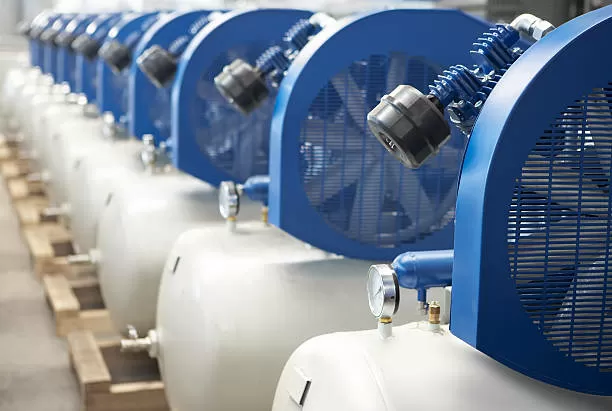
Belt drive and direct drive air compressors are two types of piston air compressors that are commonly used. Factors to consider when deciding which air compressor to purchase include:
- Pressure and speed
- The price of the machine
- The quality of the machine
- Maintenance
- Selling popularity
Whether belt driven air compressor or direct drive air compressor, both types of air compressors have advantages and disadvantages to help you decide your choice.
What is a belt drive air compressor?
Belt driven air compressors have a belt connected to a motor. When the motor is running, the belt moves the pump through the pulley. Most reciprocating compressors use belt drive, relying on the belt and pulley system rather than a direct mechanical connection between motor and pump. Reciprocating compressors often use 2-pole motors running at 3,450 RPM (60 Hz) or 2,850 RPM (50 Hz), with the pulley and belt combination stepping the pump speed down to the 400–1,600 RPM range that piston pumps are designed for. This separation between motor and pump speed gives manufacturers flexibility in matching compressor speed to application requirements.
Advantages of belt driven air compressors
Belt drive compressors use pulleys to transfer motor energy to the pump, and this pulley connection provides elasticity that cushions the impact of on/off switching, helping the whole system run more smoothly over time. A belt driven air compressor is a good choice for a home workshop. It is also suitable for indoor stores with multiple workspaces. The lubricated belt system will run efficiently, smoothly and quietly, with vibration dampening from the belt-pulley design. This quiet and efficient belt system from BISON helps minimize noise concerns with neighbors.
Flexibility
You may prefer the flexibility of the belt driven model if the air compressor is used intermittently at different speeds and power. For example, you might want to change the pressure set by the manufacturer.
BISON belt driven air compressors have a maximum rating of 115 PSI, which can meet the needs of most pneumatic tools in many conditions. The best example is this flexibility that makes belt-driven compressors ideal for woodworking or auto repair shops. Replacing the pulley changes the pump speed and therefore the air flow (CFM) the compressor delivers — for example, a larger motor pulley can raise output volume to better supply a high-consumption tool. Note that maximum pressure (PSI) is set by the pump design and pressure switch, not by the pulley; do not overspeed a pump beyond its rated RPM to chase higher pressure.
Simple maintenance
Buying and installing a belt driven air compressor is economical and simple. Maintenance of this type of compressor is relatively simple and generally requires lubrication and monthly belt tension checks. Replace oil and filter every 500 to 1,000 hours of use, depending on operating conditions. Each of BISON’s belt-driven air compressors has been tested for its durability and is designed to prevent oil leakage. After each oil change, the compressor can run for an additional 500 hours of operation.
Disadvantages of belt driven air compressors
Belts can wear out or even break and need to be replaced, which is the biggest problem of belt driven air compressors.
Pulley misalignment and belt tension
You must periodically check the alignment of the pulley and belt to ensure proper tension. Improper alignment can cause the motor to run with too much or too little stress and overload.
Sensitivity to the environment
Belt-driven air compressors cannot withstand harsh environments or extreme temperatures. Compressors of this type should not operate at temperatures below 0°C or above 40°C.
What is a direct drive air compressor?
Direct drive air compressors have a crankshaft that is directly connected to an electric motor. Direct-driven compressors typically use 4-pole motors running at 1,725 RPM (60 Hz) or 1,425 RPM (50 Hz), a slower and more direct range compared to the 3,450 RPM 2-pole motors used in belt-driven setups. The shared shaft reduces moving parts and wear, supporting a compact, low-maintenance design.
Advantages of direct drive air compressors
If you are a professional who uses air compressors a lot on the job, the direct drive model is the best choice. Since the crankshaft is directly connected to the electric motor, less energy is lost during operation.
This energy efficiency makes it an economical option for heavy industrial uses such as jackhammers and building construction.
Fewer replacement parts
Compared to belt drive compressors, direct drive air compressors have fewer moving parts, so they don’t require many parts to be replaced due to wear and tear. Sometimes they are better able to withstand constant use in industrial environments.
With no pulleys, direct drive compressors do not require regular lubrication, other than regular oil changes and weekly top-ups. In general, the oil should be changed every 100 to 500 hours — direct-drive pumps run at higher speeds and shorter oil intervals than belt-driven units, so follow your model’s manual. (Note: oil-free direct-drive models do not require oil changes — check your model’s manual.)
Withstand harsh environments
If users are working in harsh conditions or extreme temperatures, a direct drive model air compressor can be recommended. This type of compressor is designed to withstand temperatures below 0°C and up to 40°C. Synthetic oil is recommended for use in summer and winter as it does not change properties in extreme temperatures.
Disadvantages of Direct Drive Air Compressors
You can vary the outlet pressure range by a bar or two, but direct drive compressors do not have the flexibility of belt driven air compressors. Since there is no pulley mechanism between the crankshaft and the motor, pressure or speed cannot be easily adjusted.
Expensive and complicated repairs
A direct connection between the crankshaft and the motor would make repairs more expensive and complicated when they occur. For example, a malfunctioning motor can damage connected components. Other expensive and time-consuming repairs include damage to bearings, shaft seals and gearboxes due to oil leaks.
Noise
In some environments, excessive noise can be harmful and detrimental to health. You don’t want to use a direct drive compressor indoors near a garage or other workstation.
Since the crankshaft is directly connected to the motor, it doesn’t run as smoothly as a lubricated belt-driven compressor. Noise levels may disturb neighbors or people at nearby workstations.
Higher cost
We hope our distributors’ equipment purchases fit the budget and long-term needs of your operations. The higher initial cost of direct-drive models is a disadvantage for home woodworkers. While this investment can pay for itself with continued industrial use, it’s not worth it for intermittent use.
Belt drive vs direct drive comparison table
| Factor | Belt Drive | Direct Drive |
|---|---|---|
| Initial cost | Lower purchase price | Higher purchase price |
| Reliability | Dependent on belt tension and pulley alignment | Fewer points of failure since motor connects directly to the pump |
| Maintenance | Routine belt inspection, tensioning, and periodic replacement | Minimal adjustment; fewer wear parts to service |
| Repair complexity | Generally straightforward — belts and pulleys are simple to access and swap | Repairs are typically more involved and costly when internal components fail |
| Durability in harsh conditions | More sensitive to dust, moisture, and temperature extremes affecting the belt | Better suited to withstand harsh operating environments |
| Speed/output flexibility | Can be adjusted by changing pulley sizes to alter output | Fixed to motor speed, offering less flexibility |
| Noise level | Belt and pulley system tends to run quieter | Direct coupling can produce more operating noise |
| Power transfer | Some efficiency lost through the belt system | Power delivered directly from motor to pump with less energy loss in transfer |
Choosing between belt drive and direct drive
Neither design is universally superior — the right choice depends on the operating environment, budget, and how much hands-on maintenance an operator is prepared to perform.
Upfront cost and flexibility
Belt drive is the better fit when a lower purchase price is the priority. It also offers the flexibility to fine-tune output speed by swapping pulleys — an adjustability that direct drive, with its fixed motor-to-pump coupling, doesn’t provide.
Operating environment
Belt drive suits clean, temperature-stable environments where belts won’t be exposed to excessive dust or moisture. Direct drive is the better choice for harsh, dusty, or variable-temperature conditions — it can operate reliably across a range spanning below-freezing temperatures to high summer heat — since exposed belts and pulleys degrade faster under these conditions than a sealed direct coupling.
Maintenance and repair cost
Direct drive simplifies long-term maintenance: it generally needs only regular servicing of the air end, motor, and filters. Belt drive demands ongoing inspection, lubrication, and tension checks, plus eventual replacement of tensioners, pulleys, and belts. The trade-off is repair cost: direct drive’s crankshaft-motor connection makes repairs more expensive when a failure does occur.
Duty cycle, noise, and footprint
Direct drive units stay compact and hold up more reliably under continuous or heavy use, making them the better choice for higher duty cycles and space-constrained installs — but they run louder, so hearing protection matters. Belt drive suits intermittent use, where the compressor cycles on and off, but needs more physical space for the belt, pulley assembly, and safety guard.
which to choose
| Situation | Recommended |
|---|---|
| Lower upfront cost is the priority | Belt Drive |
| Need to adjust output speed (via pulley changes) | Belt Drive |
| Clean, temperature-stable environment | Belt Drive |
| Intermittent, on/off use | Belt Drive |
| Harsh, dusty, or variable-temperature environment | Direct Drive |
| Simplified long-term maintenance is the priority | Direct Drive |
| Continuous or heavy-duty use | Direct Drive |
| Limited installation space | Direct Drive |

in conclusion
Choosing between direct drive and belt drive air compressors ultimately comes down to balancing performance needs with safety requirements. An air compressor without the PSI capacity for your tool may result in property or equipment damage or personal injury.
The type of compressor you choose affects your energy bills, work flexibility and safety. The difference between belt drive and direct drive air compressors is worth learning, and the right choice often comes down to how often you’ll run the unit and how much you’re willing to spend upfront versus over time.
At BISON, we can help you source the best air compressor for your customers’ specific needs, taking into account how frequently the unit will be used and what it will cost to run over time, not just its sticker price. If you would like to learn more about direct drive or belt drive air compressors, and which one fits your usage frequency and budget, feel free to contact us or email us.


If you have any enquiries about the BISON air compressor, we would love to hear from you.