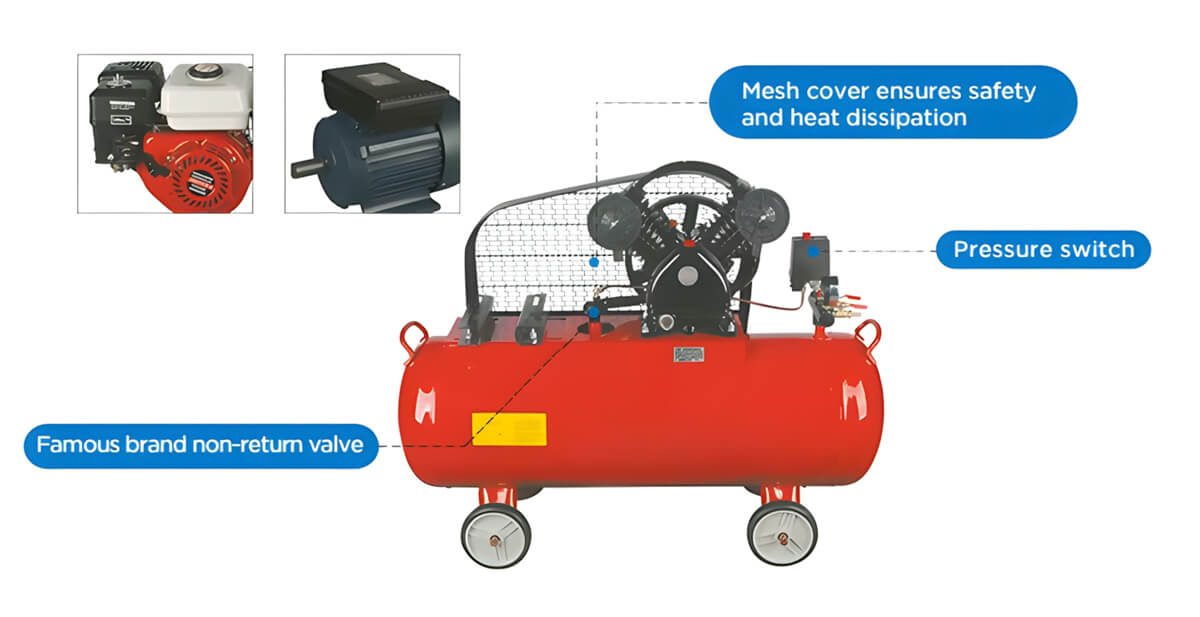
Gasoline air compressors are built to power heavy duty pneumatic and air tools, making them ideal for large DIY projects, workshops, and industrial jobs. They are especially useful in locations where electricity is unavailable, offering reliable performance in remote or outdoor work environments.
An air compressor converts engine power into compressed air to operate tools such as nail guns, spray guns, tire inflators, and other pneumatic equipment. Because of their strong output and portability, gasoline powered models are widely used in construction, automotive repair, agriculture, and field maintenance.
When working on remote job sites, roadside repairs, or outdoor projects far from a power source, a gasoline air compressor delivers dependable air power exactly where it is needed. This guide explains how gasoline air compressors work, key buying considerations, and basic safety and maintenance tips to help you choose the right machine with confidence.
How to choose the right gasoline air compressor: a buyer’s guide
Choosing the right gasoline air compressor becomes easier when you focus on key specifications and features. Here’s a step-by-step guide to help you make an informed decision.
Assess your tool requirements
Start by listing all the air-powered tools you plan to use. Check each tool’s cfm (airflow) and psi (pressure) requirements. Choose a compressor that meets or exceeds the highest-demand tool, ideally with a 30–50% buffer to ensure smooth performance and prevent engine strain.
CFM (cubic feet per minute)
Cfm measures the volume of air a compressor delivers per minute. Higher cfm allows you to run heavy-duty tools and multiple tools simultaneously. To calculate your requirements, add together the cfm ratings of all tools you expect to operate at the same time. Small tasks like inflating tires or using a nail gun need lower cfm, while tools like impact wrenches or spray guns need higher cfm.
PSI (pounds per square inch)
Psi measures air pressure. Most tools work efficiently at 90–120 psi, while specialized tasks like sandblasting may require higher pressure. Supplying the correct psi ensures proper tool operation, while excessive pressure can damage tools or reduce performance. Always match the compressor’s psi to your tool’s specifications.
By carefully evaluating cfm and psi requirements, you can select a gasoline air compressor that delivers reliable, consistent performance for all your projects.
Decide between single-stage and two-stage compressors
The number of stages determines how many times the pump compresses air.
Single-stage compressors compress air once and are best for light to medium tasks, such as inflating tires, using nail guns, or powering small pneumatic tools. They are more economical but deliver lower cfm.
Two-stage compressors compress air twice, providing higher pressure, better efficiency, and greater cfm for heavy-duty or industrial applications. Choose the type that matches the intensity and scale of your work.
Match tank size, engine power, and features to your needs
Select a tank size that allows tools to run without frequent engine starts. Engine horsepower affects how quickly and efficiently air is compressed. Higher horsepower engines deliver consistent performance for demanding jobs, while smaller engines suit lighter tasks.
Look for practical features such as gauges, pressure switches, and safety valves. Essential safety features include pressure relief valves, automatic shutoff, and thermal protection, which prevent over-pressurization, overheating, and accidents during operation.
Portability and weight
Consider how often you’ll need to move the compressor. Models with wheels and handles are easier to transport, while compact units are better for tight spaces. Heavier compressors are more stable but less mobile. For farm, construction, or roadside use, portability is essential. If the unit will mostly stay in one location, a heavier, more stable model may be acceptable.
Tank capacity
The air tank stores compressed air and determines how long tools can run without the engine cycling. Larger tanks allow continuous operation for big tasks but increase weight and cost, reducing portability. Smaller tanks make the unit lighter and easier to transport but may require more frequent engine starts. Choose tank size based on job requirements and mobility needs.
Noise levels
Gasoline air compressors naturally generate noise and are mainly suited for outdoor use. Bison compressors use advanced technology to reduce noise, making them quieter than many models on the market while remaining within acceptable limits.
Oil vs. Oil-free
Oil-lubricated compressors reduce friction between moving parts, making them durable and suitable for heavy-duty jobs. They require regular maintenance, which adds time and cost.
Oil-free compressors are low maintenance and easier to use for light work. They are cost-friendly and convenient but have a shorter lifespan and are less suitable for demanding tasks.
By considering portability, tank size, noise, and lubrication type, you can select a gasoline air compressor that best fits your work style and project needs.
Build quality
Look for compressors made with high-quality materials, robust pumps, and reliable engines. A durable machine withstands rugged job sites, lasts longer, and reduces long-term costs. Positive reviews from other buyers can also indicate product quality.
Brand reputation and warranty
Choosing a reputable brand like bison ensures you receive a reliable product backed by proper customer support. A strong warranty offers peace of mind, protects your investment, and can justify a slightly higher cost.
Practical advice
- Light diy tasks: a small tank, moderate cfm, and lower horsepower are sufficient.
- Mobile mechanics or farm use: prioritize portability, moderate to high cfm, and a durable engine.
- Heavy-duty industrial use: choose high cfm, high psi, a large tank, and robust construction for demanding tools.
By considering build quality, brand reputation, and matching specifications to your work, you can select a gasoline air compressor that delivers reliable, portable power wherever it’s needed.
Conclusion
Gasoline air compressors provide strong portability, high power, and versatile performance, making them valuable tools for both professionals and serious DIY users. Their ability to operate without electricity allows efficient work on remote job sites, farms, roadside repairs, and other locations with limited power access.
With correct selection, safe operation, and regular maintenance, a gasoline air compressor becomes a reliable long-term solution for demanding tasks.
As a professional air compressor manufacturer, BISON focuses on producing durable, high-quality, and portable gasoline compressors built for real-world working conditions. Explore our range to experience dependable power and performance wherever your work takes you.